Showing posts with label Wild Life. Show all posts

Saturday, 8 April 2017

K Gudi Jungle Lodges - Total Relaxation

Kyathadevara Gudi Wilderness Camp - popularly known as K Gudi wilderness camp is one of the wilderness camps from Jungle lodges (http://www.junglelodges.com/kyathadevara-gudi-wilderness-camp/). This is one of the unique resorts from Jungle lodges. It is situated midst of B.R.T Wildlife Sanctuary. B.R Hills is very close from the camp - it's about 30 min drive from the camp. This is the place where the Eastern Ghats meet the Western Ghats.

View from B. R. Hills


Tents - JLR K Gudi
Of all the JLR properties, this is one of those properties which hasn't been commercialized yet (compared to others). Since the forest is very thick, spotting wildlife isn't very easy. However, the place itself is very beautiful and is definitely worth a visit for total relaxation.

We had been hearing from our friends and frequent travellers that since this particular camp is amidst the jungle it is likely to shut down as some laws have been passed. We were wanted to have a small break where we could just relax and spend some time together. And this was the place we decided to go before it closes (if at all - hope it doesn't).

Its not very far, about 4 hour drive (225 Km) from Bangalore. We started at 7am, stopped for breakfast on Kanakpura road. The road was in rather bad state until we reached Mallavalli. After that, the drive was beautiful. Even in peak summer (April), there was greenery everywhere. Once we cross the entry gate of B. R. T Sanctuary, the drive is very scenic. It takes about 40min - 1 hr to the camp from the gate as it has lot of hairpin curves.

We were at the camp by 11:30am. Fresh lemonade was served, before we were shown to our tents. We had booked 2 tents. Kids decided to have a tent for themselves. All accommodations over look the forest. It is beautiful and quiet. The only sound one gets to hear is the birds chirping.  There are hammocks and tyre swings everywhere. We dumped our luggage in the tents and each one got hold of a hammock to relax.

Lunch was standard JLR lunch - simple food of salads, rotis, curries, rice and sambar. This was one of those breaks where we had not planned to do anything. Just read, eat, chat, sleep and go for safari. And that's all we did. We went for 2 jeep safaris. Did not spot any big cats. However, during the evening safari, we saw a fresh kill of Sambar deer by a tiger. The kill was left half eaten. We saw the tiger pug marks around the kill. Sambar deer are supposedly favourites of Tiger.

Half eaten Sambar Deer - Tiger Kill
As the evening set in, it got very chilly. By the time we returned from the safari, we were cold. Hot tea/coffee along with some pakoras were served. This was very refreshing. Each of us got our favourite books to read and enjoyed uninterrupted reading until dinner time.

After a good night sleep in the tents, we were given a wakeup call at 6am for the morning safari. First thing on safari our driver took us to checkout the status of the kill (which we had seen yesterday). And what we saw, was shocking. The entire Sambar deer was eaten, except for its guts which were left. We also saw the tiger's poop which had all the undigested Sambar deer hair. The sight was scary and disgusting. Scary - because we knew the tiger was somewhere close by, probably watch us. Disgusting - because, the site of all the uneaten organs and stench was not very pleasant. Our naturalist/driver mentioned that the tiger usually finishes the whole deer in a day and then hangs around a water body to quench its thirst. We waited near the water body which was very close to the kill for sometime hoping to see the tiger, but alas no sign of the cat.

Left over guts of the Sambar Deer - Tiger Kill

Tiger Poop - Sambar Deer Fur (undigested)

We saw lot of other animals during the safari - Spotted deer, Sambar deer, barking deer, langurs, mongoose, Malabar squirrel, a Bison pair, wild boars, serpent eagle, owl etc. After the safari it was time for breakfast. Breakfast was of good spread. We eat leisurely as we had no other plans before we checked out.


It was now time to checkout. We drove to Ranganathswamy temple which is located on top of B.R. Hills. The temple is about 30min (20KMs) drive from the camp. The temple was closed for renovation. However the views from the hill top are beautiful and definitely worth visiting. After this it was straight drive to Bangalore. Since Kankpura road was under repair, we joined Mysore-Bangalore highway at Madduru. We stopped at Kamath Lok Ruchi for Bhakri Oota (North Karnataka Meals). Love this food - reminds us of home town. We were home by 5pm.

Ranganathswamy Temple Gopuram - B. R. Hills


Wednesday, 31 December 2014

Bidar - A Unique Place In North Karnataka

Bidar is a district which lies at the tip of North Karnataka. This district is bordered by Andhra Pradesh and Maharashtra - infact it is just 150 Kms from Hyderabad. The districts of North Karnataka do not get the attention from the government and because of this, it has impacted the overall growth of the places here. There are a lot of interesting places here and had the government spent some effort and promoted them, they would have flourished by now. Luckily social networking and word of mouth has helped to get atleast few tourists to these places. I am hoping that in the coming years, government will focus and take up other projects of North Karnataka - similar to what they have done for Hampi, Aaihole and Pattadakal.

We have been wanting to visit Bidar for a very long time. This was, I should say the only important historical tourist place which we had not covered in Karnataka. Unfortunately Bidar is around 700 Kms from Bangalore and because of this we always kept postponing the plan. Also Bidar falls in the dry belt of Karnataka, and it is best to visit between the months of Nov-Jan. Summer's are very hot and dusty. Luckily this December we had to visit Hyderabad as Pankaj was having his 25 years Alumni meet of 10th Grade school. We planned to combine this trip with a visit to Bidar (Bidar is about 3 hrs drive from Hyderabad).

Lack of infrastructure and funds from government have impacted the growth of this place. There aren't many good hotels here. I guess it is a chicken and egg problem - because there aren't good hotels, lesser tourists visit here and because the flow of tourist is less, there aren't many hotels :( Don't know which is more applicable.

Best place to stay would be at Black Buck Resorts - Vilaspur (http://junglelodges.com/blackbuck-resort/), a resort from Jungle Lodges and Resorts. The Resort is well maintained and in very good location - facing the lake and has all the comforts of any JLR and is just 18 KMs from Bidar town. We booked an Executive Cottage facing the lake. As recommended by many tourists - we booked Cottage #8 and it turned out to be the best :)

We started from Bangalore on 25th Dec morning. The plan was to drive to Hyderabad, stay overnight at a friend's place and then next morning leave to Bidar. B'lore - Hyderabad road is awesome. The highway is in very good condition and their isn't much traffic too. This could be because there aren't any tourist spots on the way. The only drawback I find is about the options to eat. There are absolutely no eat out places until Kurnool. We had experienced it during our last road trip to Hyderabad and hence planned well. We packed some food which can keep us full until we reach Kurnool. We stopped for a quick Andhra meal at Kurnool and then straight to Hyderabad.

We decided to join a few family friends to visit the Birla Mandir. It was holiday season and huge crowd awaited us. Since we were meeting the friends after a long time, the crowd nor the queue bothered us. Had it been just us, we would have just walked back seeing the long queue. After checking out Birla Mandir, we to Ohri's for dinner. Had a great time with Aditya and Priya's family. By the time we reached Aditya's house it was pretty late. Kids were tired and they just crashed.
Bidar Fort

Next day, we had a good breakfast and drove to Bidar. It took us about 3 hours to reach Bidar. Since there was some road work in progress, it took longer. Once the road work is completed, it should not take more than 2 - 2:30 Hrs. For December, it was pretty hot during day. It was also quite dry and dusty. We reached Bidar fort around 11 AM. The fort is huge and really well maintained by ASI. Unfortunately there were no guides. This was very disappointing. Such a important historical place and no body to explain the history. We managed to get some details from the boards, books and security guards at the fort. Places to definitely see in the fort are - The fort, Madrasa, Rangeen Mahal ( we had to request the guard to open it for us - definitely worth the effort. It is in very good condition - especially the wooden pillars and the wall painitings), Solaha Khamb Mosque). It will take about 1 1/2 - 2 hrs to cover the fort.

Solaha Khamb Mosque
Rangeen Mahal


By the time we finished checking out the fort, it was time for lunch. We had to head to JLRs Black Buck Resort. This is about 18Kms from the fort. The directions were not very clear and google maps did not help. After making multiple calls to JLR we reached the resort by 1:30PM. Like all JLRs, the location of the resort is perfect. It has been done around a lake and there is lot of greenery around. The cottages are around the lake. After going through lot of room tips on Trip Advisor and considering the recommendations, we had booked Cottage #8. And undoubtedly this is the best cottage - it has the best views of the lake and is also not very far from the dining area. We checked -in and went straight for lunch.We had a good lunch and relaxed.

Lake Front - JLR Vilaspur


At 4PM, we were taken for a Black Buck Safari. Unlike other jungle lodges & resorts, this does not have any safari's in the jungle as there are no forests here. The black bucks are found in the grassland around Bidar and they are in good numbers. We had a good sighting of multiple black buck herds. The drive to see these animals in itself was not very great - it is not like a usual safari. But nevertheless this is a great effort from JLR to make Bidar a tourist friendly destination.

Black Buck Herd

We were back at the resort by 6:30PM. By now it was very chill. We needed warm jackets. 7:30PM was camp fire and some hot soup and snacks were served at the camp fire. A wild life video was also played. Whoever wished could watch the same. After dinner, we did some star gazing. The resort has a huge telescope. We could not see the planets because of change in the orbits, but the moon looked great - especially the craters.

Next morning was nature walk for 2 hours. The weather was pleasant and the walk was refreshing. Don't forget to take the binoculars and camera on these walks. We spotted some rare birds of this region. The water in the lake was receding and the naturalist who accompanied us on the nature walk mentioned that in couple of months the lake will dry up. The best season for visiting this resort is in the months of Nov - Jan. Beauty of this resort is because of the lake. There aren't many tourists from Feb. After the nature walk, we went for a coracle ride. There is Kayaking too, but since the water levels were not great we could not do it. After a good coracle ride, we went for a sumptuous breakfast and then it was time to leave.

On the way back to Hyderabad, we visited the Gurudwara - this is supposed to be the 2nd largest in India and indeed it was huge and very well maintained. We reached Hyderabad around 4PM.

In the evening it was time for a grand get together - It was Pankaj's 10th grade Alumni meet. It was fun meeting all his school friends and their families. Lot of fun activities were organized and we ate a lot of stuff. Next day it was drive back to Bangalore. This was a short vacation with lot of variety. I felt really good as my long pending trip to Bidar was done and it was worth the visit.

Sunday, 5 October 2014

Unique North East (Assam and Meghalay)

It was time to visit that part of India which has its own unique culture and landscapes and gives a completely different experience. Visit to North East leaves one with a feeling - so far yet so close. The cultures, the food, the tribes, the dressing and lot of such things leaves one thinking, how each of the 7 North East states are different from each other and yet some similar when seen from a person who does not belong to these states.

We planned for a 8 day trip to cover 2 states - Assam (Guwahati and Kaziranga) and Meghalaya (Shillong and Cherrapunji). There are direct flights from Bangalore to Guwahati. The flight duration is about 3 hours - which is pretty good. Since the trip was planned during the Navratri festival, we had completed all the bookings well in advance to avoid the last minute rush. Assam has lot of rush during Durga Pooja. We planned to start on Sep 26th and return on 4th Oct and the plan was
Bangalore > Shillong > Cherrapunji > Guwahati > Kaziranga > Bangalore. This was the best way to cover these places, if we have to avoid lot of driving.

Assam is prone to lot of flooding during the months of Jul/Aug/Sep. We were aware of this situation. However since we wanted to time it with the school holidays, we took the risk of travelling in the last week of Sep - assuming the rains would have subdued by then. Kaziranga National Park is closed between May - Oct (Park opens on Nov 1) as Brahmaputra gets flooded. However the National Park is very close to the highway NH 37, because of which spotting of Rihnos while driving through the highway is possible if one is lucky (there is a very high possibility).

TIPS
  • Though distances between places are short, it generally takes more time. Avg. Speed typically is around 40 KMs/Hr especially when travelling from Guwahati to Shillong or Cherrapunji
  • For best sighting of Rihnos, best time to visit Kaziranga National Park is Nov - Jan
  • Good to have a vehicle at hand to move between places rather than using public transport
  • Tourist places are not well marked. Best is to list the places you wish to cover and tell it up front to the driver.
  • English is very common in Meghalaya. Even the people in remote village understand and speak pretty well in English. They don't follow Hindi. However English is not common in Assam. People do understand Hindi here.
  • Vegetarian food option is not common. Even fish is considered as Veg here. Guwahati has options for pure veg restaurants. However other places one needs to be careful

Long vacations are always (most of the time) after the exams. To avoid any kind of distractions or last minute hassles, all bookings and plan was completed much before the vacation. Little did we know, the days before we reached Guwahati would end up with so much of excitement.

Shrishti's exams got over on 20th Sep and her vacation starts. Shree has couple of more more exams to go. On 21st Sep, Shree is down with high fever. The fever continues until 24th. Pankaj also falls ill. In 2 days we would be travelling and both Shree and Pankaj are unwell :(. To add to this, there is huge cloud burst in Assam because of which many parts are flooded, many villages are under water causing deaths. Even Guwahati is flooded. With all the exams, patients at home, we had no clue about this news. On 25th Oct, Shree and Panka are recovered, and that is when we read the news of floods in Assam - in the news paper. What now? Reading news online scared us more - sometimes it is good to know less. After seeing all the videos and situation in Assam, we were in double minds on whether we should even travel at this point. Since our first stop was at Shillong, I called up the cottage we had booked our stay and also the cab travel agent to check on the flood situation. Their assurance, that everything is fine and there will not be any issue, gave us a lot of confidence. We were back to packing in full swing and all excited that the trip is going to happen.

7:00 PM on 25th Sep (the day before we leave for our vacation), heavy rains with thunderstorm start in Bangalore. Within couple of hours the roads are flooded and it still continues to pour. Pankaj is stuck in office and cannot reach home as the roads are all blocked. Power is cut-off and heavy rains continue. What a night this was... There is water everywhere, our portico is flooded and we are wondering how we are going to make it to the airport as we will have to start in few hours. We decide to go to bed, assuming the rains would recede and the roads would be cleared soon. Luckily, as anticipated by 5AM, the roads were cleared and we could reach the airport on time.

Once we reached airport is when I was convinced that we would be actually taking this vacation. We had a good - ontime flight. As we descended at Guwahati, we could see the massive Brahmaputra and impact of the floods. There was water everywhere!

Sep 26th and Sep 27th - Shillong

We had booked a direct flight to Guwahati and reached there around 12 PM. Our cab was waiting when we landed at Guwahati. It is best to have a vehicle pre-booked for the entire trip. We started to Shillong. If Vegetarian, the best option is have lunch at Guwahati and then start to Shillong. Enroute Shillong there are hardly any Veg. eat outs. There is one place called Nogbouh, where there is a food court and good place to stop over. We had our lunch on the outskirts of Guwahati - just as we enter the highway to Shillong.

Though the distance to Shillong is around 120 KM, the drive will easily take 3-4 hours. The highway is prone to landslides and there is always some construction work on. Another interesting point about this highway is, one side of the highway is in Assam and other side is in Meghalaya. The divider on the highway indicates the division of states. On the Meghalaya side of the highway, we noticed lots of liquor shops. This is because the taxation is lower for Mgehalaya and hence alcohol cost is cheaper.

We reached the outskirts of Shillong around 3:30 PM. Once we got closer to Shillong, we felt the typical atmosphere of a hill station - pine trees, lakes, cool weather, narrow-winding roads, people walking around with warm clothes. It gave us a very nice feeling. Unlike other hill stations, this is not over populated. We did not see many tourists. And whatever few were there, were mostly from Assam. This could be because, it was not a peak season. We covered a couple of sightseeing places and then reached our cottage. As these states are on the eastern side of India, the day ends sooner. By 5 PM, it is pretty dark and nothing much can be done. Hence it is recommended to start the day early.

We had booked at homestay at Aerodene Cottages (http://aerodene.in/). The place is very homely, with a nice garden and is very close to the downtown and yet secluded and calm. Our room very comfortable for family of 4. The food served at the cottage was really yummy.

Places to see in Shillong

  • Uniam Lake - is bang on the highway which leads to Shillong - one will not miss this. It is huge lake. In summer there are some water sports activities available on the lake. Otherwise it is a just a huge lake which is beautiful
  • Don Bosco Museum - Must visit. Will take about 1-2 hours to cover. The sky-walk on the terrace gives a good view of Shillong city. We were during the sunset time and it was a beautiful sight. 
  • Sweet Falls - Not very popular, but is a good place to visit. Water drops from huge height. The view from View-point was great. Earlier tourist could trek to the base of the water-falls, however it is no more an option. Trek to base would have been great.
  • Sweet Falls - Shillong
  • Mawlang Sacred forest - Nice small forest. About an 1-1/2 drive from Shillong. This forest is known for medicinal plants and lot of interesting trees. It is good to hire a guide to know the different plants and also some of important places like where the Khasi Tribe Leader would sit and have an assembly, the sacrifice point etc.
  • Elephant Falls - Must visit falls. It is beautiful and very well maintained. There are 3 levels and each level has it owns beauty.
  • Elephant Falls
  • Shillong View Point - This view point is in Shillong Air-force area and pretty much gives the glimpse of entire city. However I feel the view from Don Bosco Museum's Sky Walk is much better
  • Shillong View Point
  • Wards Lake - Like any hill station, which has a lake, this is a lake in Shillong, with beautiful landscapes, boating facility on the late, live band in the evening. Good for spending a peaceful evening.

Interesting points of Meghalaya

  • Megahalaya is Matriarchy (female dominated) society. You will see women driving all aspects of life
  • English is very well known and understood even in the remotest villages. Hindi is not so common
  • Most women are dressed in the traditional Meghalaya attire or trousers and skirts. You will not find anybody wearing a Sari or a Salwar
  • It is difficult to get vegetarian food. Non-Veg is by default. 
  • All cooking is done in Mustard oil and flavours of mustard and turmeric is very very strong.
  • As eating meat is common, one can notice lot of butcher shops everywhere. This can make pure vegetarians a little uncomfortable if they are very orthodox
  • There are hardly any autos and public buses in Shillong. Most common means is to hire/share a taxi. All taxi's we saw were Martui Alto.

Sep 28th and Sep 30th - Cheerapunji

After having a great time at Shillong, we headed to Cheerapunji - which is about 60 Kms from Shillong. Our host at Areodene had recommended us to visit the Smith - Palace/House of Khasi King, which was enroute to Cheerapunji. We decided to visit this place. When we reached here, we were surprised. We need to be aware that the Palace/House is the King of Khasi Tribes. Hence don't expected it to be the palaces like Nizams/Rajputs. It is huge wooden house, built in traditional Khasi style with a huge compound. The roof is made of hay like any other house of Khasi Tribe. Unfortunately it was locked and we could not see the inside part. We were told that the place will open for visitng only during the festivities. We explored it from outside, took some pics and moved to our next destination - Laitlum Canyons

Laitlum Canyons - This place is out of world. When we went, there was hardly any person in site. Greenery all around. There are hills full of geenery and then there is deep valley and somewhere you will see a stream making its way in the valley. There are no directions to this place. We had ask so many people for direction. Wonder why it has not been publicized. Maybe that is the reason, the place is still serene. We reached this place around 11:30 AM and views were clear and awesome. Did not feel like leaving this place. It is superb!

Laitlum Canyons
After spending a considerable amount of time at Laitlum Canyons, we started driving to Cheerpunji. The drive to Cheerapunji is beautiful. I am falling short of words to describe the beauty. It needs to be experienced! The landscape is very unique. The valleys and gorges are so deep, it is unimaginable and then from nowhere a huge waterfalls. The hills are sliced like a cake and a peep into the valley brings in goose-bumps. Every such hill has a waterfall - which looks absolutely stunning when it falls from such great heights into a deep valley. 


Mawsmai Caves - As we enter the Cheerapunji town (note - it is very small town), we went straight to Mawsmai Caves. Small portion of this cave is open for public to explore. It is well lit and would take about an 30m - 1 hour to cover. One part of the cave is very narrow and can be a little claustrophobic. However the place is definitely worth visiting.  These are living caves and the formation is amazing. The road which leads to Mawsmai caves have Khasi Monolithis. Nothing worth stopping over, you can just see then when driving by.

Mawsmai Caves
Very close to Mawsmai caves is the Seven Sisters falls. This is again a huge falls. By the time we reached here it was 3PM and it view was very foggy. We could not get a good view of the falls. Imp Point: Try to cover all waterfalls before 1PM as it gets very foggy in the afternoon and views are not clear. Since we were in Cheerapunji for 2days, we decided we would come again in the morning on the day we would leave Cheerapunji.

From here, we further drove 10 Kms to the Tangaraksa Park. This park is small eco-park, well maintained and has very good view points. The waterfalls from one of the view points is superb. It is really huge. The views from this park are mesmerizing. It was very relaxing to just sit and gaze through the lush green valleys and amazing waterfalls.

Water Falls view from Tangaraksa Park

From here, we started to drive to our hotel booked in Cheerapunji. We had booked our hotel at "Cherrapunji Holiday Resort". Though the name has resort it is very simple, basic and not very fancy. The location and views are very good from this resort. Also, since we planned to do the "Trek to Double Decker Living Roots Bridge", this place was the best option. The starting point for the trek is very close this resort. The drive from Cheerapunji town to this resort is superb. One one side there are huge mountains which are full of small shrubs of different colored flowers and small waterfalls, which seem to pop from no where. On the other side of the road is very deep valley full of rain forest which are fresh and lush green because of the rains.

Route to Cherrapunji Holiday Resort
By the time we reached the resort it was 5 PM and the sunset looked beautiful. The resort has a huge hall with rooms (6) around the hall - like a heritage house with a common dining hall with entrance to the room from the hall. The rooms very basic but clean. People who stay here typically are the ones who want to do the trek. Our trek was planned for next day (Sep 29th). We met few other people here, who had just completed the trek. We got few tips from them and we were all excited to do this trek.

Evening was spent just relaxing, chatting with other fellow tourists at the resort over a camp fire. We had a early dinner and asked for packed lunch of sandwiches and parathas for the trek. From the time I had read about this trek, I was very excited and had got the entire family excited about this. Initially I was not sure whether the kids could make this trek, but after reading up on google and checking from the resort counter, it was clear that kids can very well do this trek. We slept early as we wanted to be fresh and all charged up for the trek.

Yes, the day had arrived. We had a light breakfast, carried lots of water and packed lunch of sandwiches. We decided to drop carrying our SLR and take pics by our cell phone to avoid any extra luggage. We also had arranged for a guide to come along with us. Our cab dropped us at 8:30 AM at the start of the trek.

Interesting points of the trek (Double Decker Root Bridges)

  • Trek is of around 10KMs and includes around 10,000 steps (inclusive of both ways). It takes about 6-8 hours to do the entire trek
  • There are 2 hanging adventurous bridges en-route the trek.
  • There are couple of villages on the way. One will be surprised how they live at such remote places and climb these steps.
  • There are couple of small shops which provide tea and some chocolates/toffees
  • As part of this trek, we can cover the Double -Decker living root bridge and a longest living bridge (95 feet). Both these are made by the roots of the rubber tree, which grows in this rain forest
  • Carry lots of water and light food
  • Good to carry a swim suit. There is nice natural pool below the Double-Decker bridge and one will be waiting to get into the water
  • Since the trek is in the rain forest, it will get humid. Hence wear light clothes.
  • Good foot-ware (shoes) is a must
  • Most of the trek is through the forest, hence the sun will not hit directly
  • Kids above 10 years can easily do it. Every younger kids can do it, but they can loose interest as it is for a pretty long duration.
  • Take multiple small breaks rather than few long breaks 

Trek to Double-Decker bridge is a must if one is visiting Cheerapunji. It is once in a life time experience. The trek starts with descending of steps. Around 3000 steps to descend. These steps lead to a small village. The steps are constructed few years back and built in the forest. We saw lot of different colored butterflies, Noh Kalikai falls looked beautiful from here. We saw some men carrying a huge log of wood on their back and climbing the steps. Our guide, told us that these men do more than one such trips. It is not very easy to climb up/down with out any luggage and seeing these me do such trips multiple times gave us a glimpse of how their life is full of hardship. At this point, it kind of gives us a reality check on how easy life we are leading and makes us to be thankful for what we have. People living in these villages will have to climb these steps to reach the town to buy any stuff. We saw a pregnant women also climbing the steps to go to Cheerapunji.
Man Carrying a Log of wood and climbing the steps
Once we reach the first village, turning left leads to the path which goes to Double-Decker bridge. Right will take to the longest living bridge. We took the left direction and decided to visit the longest bridge on the way back. From here for sometime the trek is a normal path (no steps). After sometime we came across a hanging bridge - made from few thin (may be 4-5) iron rods held by iron ropes. We need to walk on these rods to cross the bridge. Below the bridge is water and rocks. One by one we crossed the bridge. We loved it - especially the kids, as this was a unique experience and very very adventurous for them.
Adventure Bridges over gorges - enroute to double decker bridge
The whole path is through the forest. We saw lots of insects, colorful butterflies, cool refreshing streams and no people. We look around and we could only see huge mountains with trees and we are in the valley. After some more trekking. we came across the second hanging bridge (little longer than the earlier one) and more adventurous. Here we met one fellow tourist (70yr old man) who was also staying in the same resort as us and was returning back after finishing the trek to Double Decker bridge. At this point we came across a small shop selling tea and toffees. From here, further trekking is by steps (1000 +). We walked over a small living root bridge and after some more walking, we reached the Double Decker bridge around 11 AM. Once we reached this point - only word that came out of our mouth was "WOW". All the tiredness vanished in a min the moment we put our legs in the cool water of the pool. This spot is beautiful. The bridge itself is built by the villagers to help them cross. These bridges are made by the roots of the rubber trees grown in these areas. The roots are directed to grow through the bettle nuts hollow stems to add further strength and support. The roots are very strong. This particular bridge has 2 bridges one above the other, hence the name. The 3rd layer is being slowly coming up. It take 100 years to get a bridge done.
Double Decker Living Roots Bridge
At this point, there is a village with some 30-40 people and a guest house which typically is taken by adventure tourists. These villages are totally disconnected from the main-land. Only people they see are the tourist that come here. They are most self-sufficient and eat only what is grown by them. Can't imagine staying so far away in a remote place.

We spent some time here playing in the pool and refreshing. We had our packed lunch and relaxed for sometime. We wanted to stay here for more time. But reluctantly had to pack to move again as we had a long walk back - wished this place was easily accessible.

We started back at noon. By this time it was hot and humid and our bodies had got used to relaxing. It took some time to get back to the spirit of trekking. After few minutes, we were back with all the zosh and zing. We crossed all the points we had encountered earlier and reached the village from where we could go to the longest living bridge (95 feet). This place was amazing. It felt like the scene in Jurassic park or Amazon forest - out of the world. We spent some time here, took some pictures and started our climb back - 3000 + steps. The kids were more energetic than we thought. They were always ahead. I was the one who was the slowest. I was pretty tired and was taking break after every 50-70 steps. The climb is tiring and as we got closer, I wanted to just sit. Lot of short breaks actually helped.

By the time we reached the top, it was 3PM. We were tried but happy that we could complete it. It was our dream coming true. We went back to our room, refreshed and all the tiredness just seemed to have vanished. We spent rest of the day relaxing. By 5 PM we were relaxed and wanted to walk around. After having walked the whole day, suddenly just sitting was making us uneasy. We went to a view point very close to the resort can then had an early dinner and crashed. Luckily none of us had any kind of injuries or sprains.

Noh Kalkai Falls
Next day we were are all up and charged. We were driving back to Guwahati. Since we had not got good views of the falls because of the fog, we wanted to cover them before we left Cheerapunji. We visited the Seven Sister FallsNoh Kalikai falls, Wah Kaba Fall and some great view points. Each of these falls is unique and beautiful. They all fall from un-imaginable heights. We also saw some coal mines in Cheerrapunji - though mining is now officially made illegal. From here is was drive back to Guwahati (5 hrs) with a quick stop for lunch at Norbough

Sep 30th - 2nd Oct

We reached Guwahati around 3PM and it was typically city – dusty, noisy, highly populated and polluted and also very hot. Because of the festival time (Durga Pooja) there was additional traffic and chaos. Wonder why all cities have the same atmosphere. However the whole city had a very festive atmosphere – there were pendals everywhere, lot of colorful lightings and decorations, people shopping etc. Once we entered the city, we headed straight to Kalashetra. The museum here is good. They also a museum dedicated to Bhupen Hazarika. This is not a must visit place. We visited the Shilpa Gram opposite Kalashtra. We were disappointed. Absolutely nothing is here. The whole place was constructed to promote north-east art and cluture. However it has deserted look and only a couple of shops are taken up. This can be completely avoided.

From here we went to take the sunset cruise over Brahmaputra. The river is mighty and because of the recent rains it had further bloated. It seemed like a ocean! The cruise claim to start at 5:30, however they start only by 5:45-6PM. The cruise is very relaxing. Option to buy snacks and drinks on board is available. They also have dinner cruises. We took the Afresco Cruise. 45 min of cruise on the river with snacks and drink with cool breeze and twinkling stars was amazingly pleasant and we forgot all the noise and dust of the city. After the cruise we headed straight to our Hotel. We had booked our stay at “Brahmaputra Ashok”. The hotel is at a good location. We were welcomed with traditional hats and shawls of Assam. This hotel is bang on the banks of the river. Our room had a good view of the river and was very comfortable. We were happy to be back in the room as it was quite here (we wanted to get out of the noise) and we wanted to just relax.
Durga Pooa Pendal at Guwahati
We had not planned much for Guwahati as this place is more of a stopover and there isn’t much to do here. Since we had lot of time, next day we visited the zoo in the morning. Like all zoos in India, this is not well maintained and can be avoided. From here we visited the Uma Nanda temple. This temple is on an island and we need to take a ferry to reach here. There are ferries running every hour. The whole visit (waiting for ferry, ferry ride, visit to temple, and back) will take about 1 – 1 ½ hour. This is a good place to visit. Visit in the afternoon can be very hot. We went at noon and it was very hot and to add to this we missed the ferry by some 20 min and had wait for the next ferry.
Island of Uma Nanda Temple - Guwahati
We had lunch at Mohan Bog. The food was great. Guwahati has many chat/sweet veg restaurants. The food here is very tasty.  Assam state museum was closed for the Pooja holidays – hence we missed it. In the evening we visited the Kamakhya Temple. This requires a special details. We had no idea what we would be experiencing here. The only thing we knew was Kamakhya temple is a well know temple in Guwahati and is a must visit. It is also one of the old temples. We reached here around 4PM. There was huge crowd (however we got to know that this is very minuscule in comparison to what was in the morning) as it was Durga Pooja Day (8th Day of Navrathri). The path that leads to the temple is a narrow lane with steps which are lined with small shops all over. As it was festival time, there was more color. Everywhere there was RED color (KUM-KUM). We reached the temple and were observing the temple when heard a man saying “Baju” (move). We just turned and were shocked to see a buffalo being carried after a sacrifice. We were shocked. This was something we were not prepared not expecting here. Since we had come so far, we entered the main temple and sight was something for which we were not prepared. We came out and my younger daughter asked us did we see the 8-10 heads of buffalos stacked one above the other inside. None of us had seen this as we were already shocked with the earlier sighting. Pankaj went back to check it. Shree and I opted to stay back. Did not have the courage to see it. This whole experience made us rekindle on how different cultures have different beliefs and what is considered as auspicious and good in one culture can completely offend somebody who belongs to a different culture. It is very important to keep an open mind and convince oneself that there is no right or wrong when it comes to religion or culture. After we returned, we googled and found that animal sacrifice is very common and festival days. Had we known about this, maybe we would have chosen another day to visit the temple. Nevertheless, none of us will ever forget this incident in our lives.

Late evening we went to see the Durga Pooja pendals. This festival is done at a very large scale here (similar to the Ganesha festival in Maharashtra). There are pendals with lot of decoration at every junction. Different menus are set in the restaurant for the Pooja. The sweet marts are flooded with people. There are tons of sweets. In all a very festive atmosphere and very unique to West Bengal and Assam states

2nd Oct - 4th Oct

2nd of Oct, after breakfast, we started our journey from Guwahati. Pobitaro National Park is about 50Kms from Guwahati. This is a small national park, but is good for sighting Rihnos. As the park is not wide-spread, spotting of animals is very easy. The park is open from Nov 1 – End of April. We however took a chance to see if we could be lucky. The park was closed because of the floods, however we sighted 4-5 One Horn Rihnos in the fields around the park. We were very excited when we spotted the Rihnos.

Flooded Brahmaputra River

From here, we drove to Kaziranga National Park. This park is about 250 Kms from Guwahati and would take about 4 hours. The highway connecting Guwahati-Kaziranga is very good and there is hardly any traffic. On both sides of the highway, there are paddy fields in different shades of Green – what a lovely treat to eyes. Richness of Brahmaputra river can be experienced here.

Kaziranga National Park is open from Nov 1st – end of April. This park is known for One Horn Rihnos and Water Buffalos. Since the school holidays will never coincide with the park open schedules, we decided to visit Kaziranga – knowing fully that we may not be able to see any animals. We had our stay booked with “Diphlu River Lodge” (www.diphluriverlodge.com). This is a beautiful resort with excellent location, cottages and food. It is definitely the best place to stay in Kaziranga. The tariff is on a higher side. Since we booked this during off-season, we got good discount.
Diphlu River Lodge - Cottage
We reached Kaziranga around 3PM. The national park runs parallel to the highway and this proved very lucky. One side of the highway there is the National Park and the other side has Tea gardens.  At one point, we saw about 11 Rihno’s grazing the water-filled fields – this was bang next to highway. We were lucky to get such good spotting even though the park was closed. This made our day! As we reached our lodge, we were taken by another surprise. The river lodge was amazing. The cottages are rustic and built in assamese style. Few of the cottages face the river. The whole place gets a magical once the sun sets. You will see fireflies twinkling, stars twinkling in the clear sky and there is absolutely no other noise. Dim electric lanterns are lit which makes the whole place look even more beautiful. A small pond at the center has lilies which bloom fully after the sun sets. The food is very tasty and caters to international tourists. Now that we had spotted Rihnos and very staying in an amazing place, we were no more disappointed nor feeling sad that we had visited Kaziranga during the off-season. Ofcourse visiting the place during the season would have given a whole different experience, as we could have done the elephant safari and spotted Rihnos from very close distance.

For the 2 days we stayed, we went for a Safari (both morning and evening). Every safari we spotted Rihnos, Water Buffalos and couple of Hog Deer’s. One of the mornings we visited a Assam’s Village where they have handlooms and some tribal women work here. Meeting the lady who runs this handloom was an experience in itself. In this remote village, she runs looms and provides employment to women. She also collects the different handmade stuff from different village folks and sells them at various melas. She also runs a restaurant during the season which serves breakfast and lunch of local cuisine and decor  for tourists visiting Kaziranga National Park. She was very enterprising. She explained to us in very good English, how things are made on handloom. Kids tried their hands on it. We also bought some scarfs from her loom shop. After Kaziranaga, it was back to Guwahati airport and then the flight back to Bangalore.

We had an exciting and adventurous trip in Assam and Meghalaya. Cheerapunji and Kaziranga National Park are a must visit places and if at Cheerapunji, trek to Double Decker Living roots bridges is an absolute must.


Friday, 18 October 2013

Kenya - Cradle of Mankind


Kenya – Cradle of Mankind, true to its name, everybody can relate to this place. It was one of the must visit place on Pankaj's list. He is totally into evolution and history of mankind. All of us also love wildlife. Hence we shortlisted Kenya. Both Kenya and Tanzania top the list on the high probability of sighting wildlife – especially the BIG FIVE (Lions, Leopards, Rhinos, Elephants and Buffalo). We decided on Kenya as we planned to visit the  during October. Based on which time of the year you plan the trip, you can either choose Kenya or Tanzania. Best time of course would be July-August – peak time for migration and also peak tourist time. But because of the school holiday constraints, we decided to go in October, the next best season. And we were not disappointed at all. After experiencing the safaris in Kenya, all other national parks seem very small and less exciting.

Elephant Herd with backdrop of Kilimanjaro - Amboseli National Park


Young Lion @ Masai Mara


Hundred of Wild Buffaloes at Masai Mara

If one is travelling from India, then the planning needs to be done at least couple of months in advance. It is best to book the tour through known travel agents. The tours can be availed at cheaper rates, if you book from Africa through some known contact. Like any other developing country, there is high risk of fraud bookings. Hence one needs to be extra cautious and go with well known tourist agencies. Though there was lot of information on various fraud cases, we found the people of Kenya very friendly and we did not face any issues during our trip. We booked our custom tour through Travel Baazar (www.travelbaazar.com). Since Kenya has lot of reserves, we gave a list of reserves we wanted to visit and the number of days at each reserve. Our travel agent came up with the list of resorts based on our specified requirements and that's how we made our itinerary.

Lioness and Cubs @ Masai Mara


Basically we wanted to visit Nairobi – more as a stop over and starting point for all travels. Then it was Amboseli for Kilimanjaro and the Big Five – especially the elephants, Lake Nakuru for the Pink Flamingos and White Rhinos and the geological significance of Rift Valley and salt water lake, Masai Mara – mother of all reserves for the Big Five, all kinds of animals and the great Mara river and the migration. So our trip was to start with Nairobi (1N) – Amboseli (2N) – Lake Nakuru (2N) – Masai Mara (2N)

TIPS
  1. Preferably book the tour with a travel agent
  2. Every reserve requires minimum of 2 nights stay (4 game drives)
  3. Consider the travel time from one reserve to another while planning the itinerary. Drive from one reserve to another would require atleast 4-6 hours.
  4. During the drive, carry snacks and fruits as there aren't many places where one could stop for a small snack/tea/coffee.
  5. Most countries require a yellow fever immunisation and certificate. At Bangalore, this is done on Wednesday's in the government health care centre near Freedom Park. Usually the travel agents take care of the appointments. Ensure there is enough gap (atleast 3-4 weeks) between the immunisation and travel date. The certificate is valid for 10 years.
  6. Highly recommended to choose a resort within the national reserve. This will be a little expensive. But it is totally worth it. The deeper the resort in the reserve, the expensive it gets :)
  7. If you are brave enough to camp, then nothing like it. There are lot of agencies who help in camping in the reserve.
  8. All reserve have 2 game drives per day – one in the morning starting from 6AM – 9AM and then in the evening from 3:30PM – 6:30PM.
  9. Independent good binoculars are must for each traveller (don't share, you will end up missing stuff)
  10. Good camera
  11. Hats and scarfs to cover the hair and mouth. The safari's can get very dusty.
  12. Also roads across Kenya are very dusty and bumpy, be prepared
  13. Light jackets and sun glasses
  14. Lip balms and sun screen as there is lot of temperature changes. Because of this and dust, the lips tend to crack
  15. Independent safari vehicle (non sharing) for the family or if in group for the group. This helps a lot and can make a big difference
  16. Note book and Pen to write the names of the sightings. You will be surprised on the number of different animals you will see.
  17. Don't pack any thing delicate. Preferably carry bags which are strong and rugged
  18. Carry lot of loose cotton wear – preferably in colours which don't standout. Don't carry anything white or very light colour. If you carry one don't be surprised with the change in colour after the trip :)
  19. Most resorts have swimming pools, hence a swim suit will be required as one gets lot of free time during non-safari hours.
  20. Most resorts don't have T.V nor cell phone signals. Hence carry books/magazines
  21. Most safari vehicles are non-a/c as they need to open the roof for animal sighting. Please specify if you want a/c vehicles


We started planning for our trip around end of July 2013. Our trip for planned for Oct 9 – Oct 17, 2013. Here was our itinerary

Oct 10 – Nairobi - Laico Regency Hotel

Oct 11 – Amboseli – Amboseli Serena Lodge
Oct 12 – Amboseli – Amboseli Serena Lodge
Oct 13 – Nakuru Lake – Lake Nakuru Lodge
Oct 14 – Nakuru Lake – Lake Nakuru Lodge
Oct 15 – Masai Mara – Mara Serena Safari Lodge
Oct 16 – Masai Mara – Mara Serena Safari Lodge
Oct 17 – Check out from Masai Mara, drive to Nairobi and fly to Bangalore


After the bookings were completed, the biggest hurdle was getting the yellow fever immunisation. During this time there was a acute shortage of the vaccine. This vaccine is administered by the government and immunisation is done for limited people, only once a week. Because of all these constraints, there was a huge waiting list. Since we had initiated this in advance, we were able to get the immunisation few weeks before our travel. At Bangalore, this is done only on Wednesday, hence we had to take leave from office and the kids had to miss school. Good part is the certificate is valid for 10 years.

Kids feeding the Giraffe @ Giraffe Manor Nairobi


There are no direct flights from Bangalore to Nairobi. Hence we had our bookings from Bangalore – Mumbai – Nairobi with Kenyan Airways. Kenyan airways is the national carrier of Kenya and decent – not as high end as Emirates.

We were very specific when we did our bookings. We ensured our accommodation were in the National Reserve, we choose a family room which could accommodate 2 adults and 2 kids rather than 2 separate room (most of these resorts have family room options – please check before booking), a separate independent safari vehicle which will be with us from Nairobi until our return. The best part of such booking is the vehicle and the driver will be with you all along when moving from one place to another and also all these vehicles have a detachable roofs which double up as safari vehicles.

Atlast the travel day had come and we were all very excited. This was our first trip to an African country and we had never done a wildlife trip like this before. Most of our wildlife trips have been for 2-3 days in India. This was big for us. We had a late night flight to Mumbai on 9th October and an early morning flight from Mumbai to Nairobi. Since we were travelling towards west of India, we gained time. We were in Nairobi by 7am on 10th October. Since we had booked our trip through a travel agent, their representatives were at the airport to pick us up. We were briefed on the tour and were given nice safari hats. It was about 1 1/2 hour drive from airport to our hotel.

Traffic Jams at Nairobi

Kenya is on the east coast of Africa. Nairobi is the capital of Kenya. Swahili is the local language. However most of them speak English. “Jambo” - which means Hi/Hello in Swahili. One gets to hear this word everywhere. Nairobi airport is very small. It resembles the small airports of non-metro cities in India. The airport was under construction. Hopefully the new airport will be bigger and better. The first impression of Nairobi was - “were we really outside India?” It looked so much like any other place in India. There are lots of people everywhere, dust, traffic, noise etc. Nothing can beat the traffic in Nairobi – it's really bad. One can get stuck for hours on the road. Since most cars are non-a/c the air and noise pollution can be very irritating. This is not a place for a vacation. It is more of a stop -over to explore the real beauty of Kenya.

10th Oct (Liaco Regency Hotel - Nairobi) 

Nairobi National Musuem
Nairobi Mamba Village


Liaco Regency Hotel was pretty good. This is located in the central business district. We had no major plans for Nairobi as we were pretty tired. Some of the things we did in Nairobi – first we visited the National Museum of Kenya (http://www.museums.or.ke/). This is must visit place when in Nairobi. They have some very rare collection of fossils and skeleton of very early human being. One would require atleast 2 hours to explore the museum. From here we visited Nairobi Mamba village. Here we got see some Nile river crocodiles and also tortoises. Pankaj carried a baby crocodile and the kids touched it. I did not dare to do either :(. From here we went to the Giraffe Manor – here one can pet the Giraffe's, you can feed them. One gets to see a lot of Giraffes here. This can be easily skipped if you are planning to do the game drives in Masai Mara or Lake Nukuru. You will get to see a lot of Giraffe's in the wild and at very close distance. We also visited the Kazuri Bead factory and got a tour on how the beads were made. I also bought some earrings and necklace made here. After this we did some walking around the Central Business District. The traffic is really bad in Nairobi and one can get stuck on the road for hours. Another must visit place is “Hotel Carnivore”. Since most of us are vegetarians, we could not push ourselves to visit this place. This is highly recommended for meat eaters. We had an early dinner as the plan was start early next day to Amboseli.

Safari Vehicle for Game Drives

11th – 13th Oct (Amboseli Serena Lodge @ Amboseli National Park)

Charles - Our driver cum safari guide was ready with the vehicle at the hotel by 7:30AM. We had a good breakfast Laico Hotel and started our journey around 8AM. Drive to Amboseli is about 4hrs drive from Nairobi. Lot of time is lost in getting out of Nairobi because of the traffic mess. Also the roads in Kenya are not great – very similar to India. The drive is very dust and goes through lot of villages. It almost felt like we were driving in India.

Amboseli Serena Lodge
We had to register and show our booking at the Amboseli Reserves entrance gate. There are only a few resorts available inside the national park. Staying in a place within the reserve is amazing. However since the number of such resorts are limited, one needs to book well in advance. At the entrance, there were a few Masai tribal men and women selling some stuff made from wood, beads etc. Once we entered the gate of Amboseli National Park, the landscape changed. Since it is grasslands, one can see things which are at long distance too. While we driving in, the great Kilimanjaro was on our left. This view cannot be explained, it needs to be experienced. At this point, I realised why people die to visit Africa – it is amazing. One is transferred into a completely different world. Drive to the resort was about 45mins from the entrance. Amboseli Serena Lodge faces Kilimanjaro. Some rooms have direct view of the mountain. Because of the huge number of tourists from different parts of the world, the buffets in these resorts are of wide spread. There is a huge variety of good food. With nothing much to do other than the game drives, one tends to over eat. Don't be surprised if you gain a few Kg after you return from Kenya trip. Also the resorts are very tourist friendly - like most of the staff, can communicate in English, there is swimming pool, well stocked bar, souvenir shop, help desk to plan our day etc.

Elephant Herd - Amboseli National Park

We had booked a family room. The room was very good and was facing the reserve. Since the resort is inside the National park, there is enough secure fencing made around the resort to keep away the wild animals. One gets to see a lot of wild animals in the early mornings and late evenings, right outside the rooms. Our room was national park facing. We kept our luggage and headed straight to have lunch. We were thrilled to see the spread – there is a lot of variety for every course. Every family/group is assigned a table and we are supposed to eat all our meals at the same table. We had our lunch at leisure. After lunch, we rested for a while and then it was time to leave for game drive. All game drives start at 3:30PM and go up to 6:30-7PM. Because of the grasslands and abundance of wildlife, there is nothing to worry about whether one can spot animals.

Cheetha - Amboseli National Park


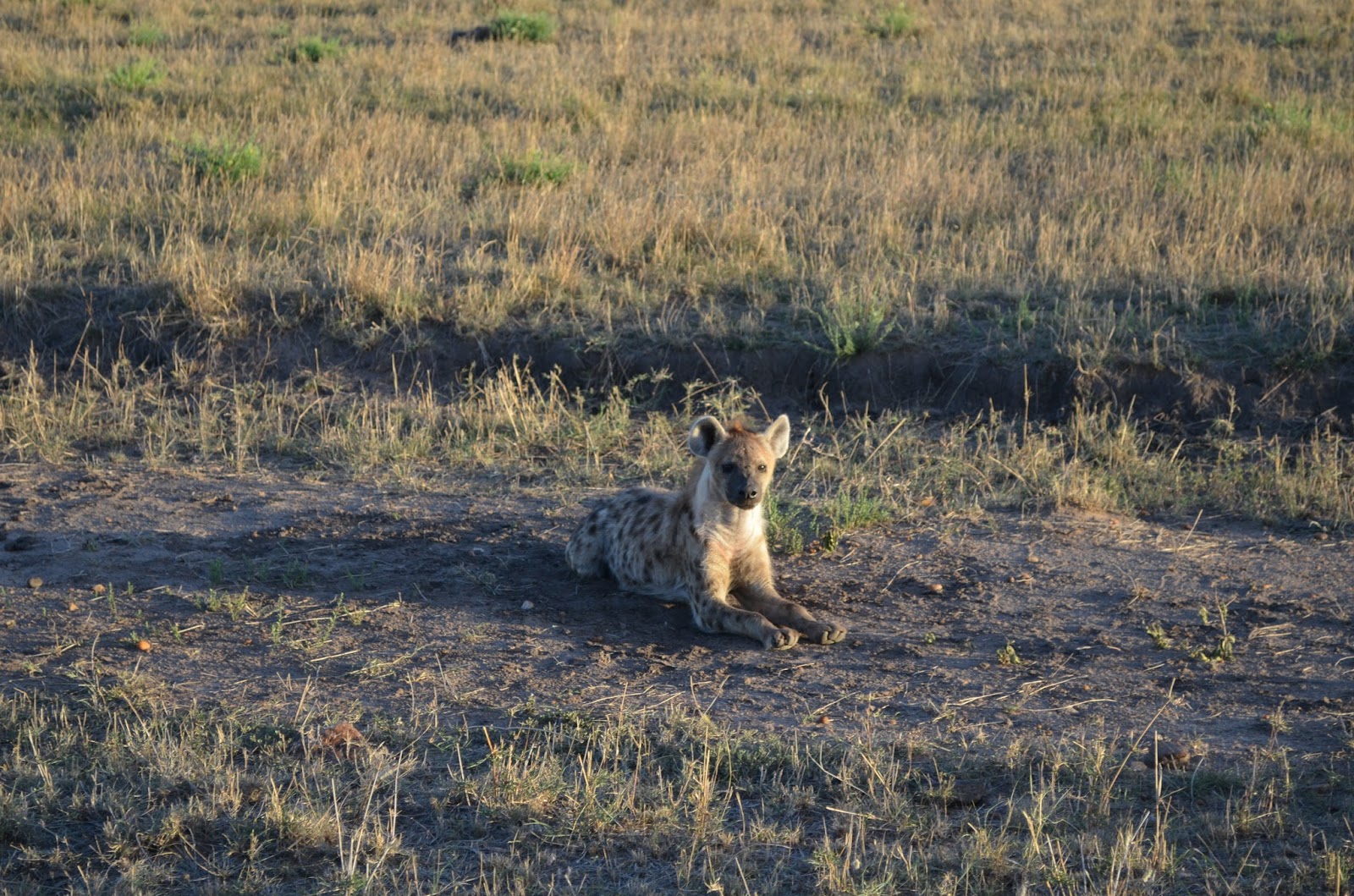
Amboseli is known for African Elephants. We could see huge elephant herds of various sizes. Because of the way the safari vehicles are designed, one gets to see the animals up close. View of these elephant herds with Kilimanjaro as the backdrop is a worthy sight. What everybody will be waiting to see is if they can catch some action – either a kill or a chase. We had totally 4 game drives across 2 days and could see lots of wild life. We saw lost of Elephants, Lions, Cheetahs, lots of wildebeests, lots of Zebras, Hyenas, some secretary bird, baboons, gazelles, Giraffe's, Hippos, ostrich and many more animals. Best part was we spotted the Cheetahs and were hoping to see some action. The Cheetahs were just waiting and we were also waiting. This continued for atleast 10min and then suddenly one Cheetah started chasing a small animal. We were awed by the speed at which the Cheetah started chasing the animal. We could not see what animal it was, but it ran very fast to escape being killed and it succeeded. We waited for some more time, hoping the Cheetah would find it and we could see some action. But nothing happened. Moment the Cheetah started chasing, we were scared. Never experienced how fast a Cheetah can run. It is one thing to want to see some action, but when you are in wild around wild animals, the feeling is different. You always have the fear – what if?

Our routine was same everyday, get up, go for game drive, come back have good breakfast, relax (may be swim or read a book or just sleep), then lunch, relax, game drive, list the animals we spotted and ponder over the experiences, dinner and sleep.

Zebra's Crossing - Amboseli National Park


Unlike other national parks in Kenya, Amboseli has its unique beauty. The view of great Kilimanjaro adds the beauty to this park. Kilimanjaro is a snow capped mountain. Because of the vast grasslands of Amboseli, the mountain can be experienced from almost everywhere in the park. In the morning game drives, the view of fresh grassland, with herds of elephants – of all sizes and backdrop of Kilimanjaro is breathtaking. In the evening game drive the same snow capped mountain takes a new look. The setting sun adds the hues of orange to the snow cap and it is just beautiful.

Welcome Dance by Masai Tribe

Another unique experience we had at Amboseli was visiting the Masai village. Tours are available to visit the Masai village. Though one can feel that the whole thing is setup for the tourists, it is worth the experience. We took this tour to understand the history of one of the great tribes of Africa. The Masai tribes can be spotted anywhere with their red attire and lots of piercing and bead ornaments. The tour was of 1 hour. We were taken to a Masai village, which is very close to the Amboseli Serena Lodge. First, we were given a warm welcome, with some dance and songs. We also joined the Masai group in the dance. The tour guide was a Masai and spoke good English. He explained and demonstrated to us how fire could be created without matchsticks and by just rubbing 2 types of woods. It was amazing. He also told us how the tribe survived on blood and meat. The houses are built with hay, cattle dung and covered with animal skin. They have a low ceiling and are pretty dark inside. We went inside a house and saw how beds were made. They also had a market set up for tourists where one could buy stuff made by the tribes – which included small ornaments made with beads, some wooden animals etc. We bought some earring and small chains for kids from the market.There was a school setup by the NGO, where the kids of the Masai village could study. Not sure whether this school was actually functional or setup more to get funds from tourists. Overall it was great
experience.

Dust Storm - Ambsoeli National park

Lake Nakuru - Nakuru Lodge (Oct 13th – Oct 15th)


Thousands of Flamingoes dotting Lake Nakuru


After spending 2 wonderful days at Amboseli, it was now time to head to our next destination – Nakuru National Park. It is a very long drive from Amboseli to Nakuru – its about 400KMs and will take 7-8 hours by road. We had a good breakfast and checked out. We stopped at Nairobi for lunch. Our driver thought we ate only Indian food, hence took us to an Indian restaurant. This restaurant was in a locality where there were many Indians. Though we would have eaten at any Veg restaurant, since our driver had got us here, we were more than happy to eat some Indian food. This was one of the long drives. We would reach Nakuru only by 3-4PM. Lake Nakuru falls in the rift valley. On the away, we stopped at a view point from where we could see and experience the rift. It is amazing to see how nature can change the landscape. Most lakes in the rift valley are salt (alkaline) water lakes and have unique habitants. Lake Nakuru is known for Flamingos. But due to lot of flooding and change in the salt content of the lake, the birds are moving higher up to a lake close to Mount Kenya. Nevertheless there are still tons of Flamingos in Lake Nakuru. Lake Nakuru is also famous for White Rhinos, baboons and lot of other birds. Apart from this there are many predators and herbivorous animals.

Buffaloes around Lake Nakuru


After a long drive we reached Nakuru around 4:30PM. Dark clouds had gathered and it would start raining any time. Our guide/driver thought we would not be keen on going for a game drive after such an exhausting drive. But we were like – lets go straight to the game drive. Without checking into the hotel, we headed to the game drive and this game drive turned out to be just amazing. We saw a lot of wildlife which included Eland, Warthog, Impalas, Thompson Gazelles, tons of Flamingos, Giraffe, Zebras, White Rhino, Cheetahs, Buffalos and lions. A amazing experience was to see a lion waiting a distance from a group of Giraffes. We were all hoping to see the lion attack the Giraffes. We waited for long time and nothing happened. We saw the giraffe sensing something and started moving away from where the lion was hiding and eventually went far off. By now the clouds burst into rain. All the vans closed down their top viewing windows. After some time we reached a spot where we saw around 20-25 giraffes all standing in semi-circle and getting drenched in rain. This was beautiful! It was getting dark and time to get back to the resort. As we neared the resort we saw a Jackal and lots of Impalas and Elands around the resort. 

Giraffes - Lake Nakuru
 

Atlast we checked into Lake Nakuru Lodge and felt like not doing anything. We got into our room and everybody just crashed on the bed. After sometime we realised we were very hungry. Though we did not want to get out, hunger drove us to the dining area. The sight of lots of delicious food made us forget our tiredness. We enjoyed our dinner and called it a day.

White Rhinos @ Lake Nakuru

Next day we went for more game drives and saw more animals. From far the lake looks like there are small pink dots on something blue. As we got closer, we saw that the pink dots were nothing but hundreds of pink Flamingos. The sight is awesome. After our game drive, we had breakfast and kids went straight to the pool. I and Pankaj decided to just sit and read. Lot of people also visit Mount Kenya if they are visiting Lake Nakuru. That would require another extra day. 
At night, the resort had organized a stunt show by local villagers. The group performed some amazing stunts with fire and cycles.  

Kids enjoying in the pool @ Lake Nakuru Lodge
 
Baboons - right outside lake Nakuru Lodge
Performance by local villagers - Lake Nakuru Lodge


Our next stop was Masai Mara. Hence we decided to stop over at lake Naivasha as it is on the way to Masai Mara. Lake Naivasha is a fresh water lake and falls in the rift valley but at a higher altitude. It is known for Hippos and fish eating eagles. Lot of other African animals have also been introduced around lake Naivasha. This is about 2 hours from Lake Nakuru enroute Masai Mara. We had our breakfast and bid good by to the Flamingos and headed to lake Naivasha.

Hippos @ Lake Naivasha

Birds @ Lake Naivasha

At Lake Naivasha, we took boat tour. This is the best way to explore the wildlife on the lake. We saw lot of birds, hippos and many other animals. Most interesting part was see the white headed eagle flying all the way from a far of tree to catch the fish thrown by the boatman. As soon as the boatman whistled, the eagle would fly and catch the fish thrown. The eagle has really good vision, but this was experiencing it first hand. After spending couple of hours at Lake Naivasha, it was time to head to THE MOTHER OF ALL WILDLIFE DESTINATION – MASAI MARA. En route Masai Mara, our driver stopped a souvenir shop on the road side. There are lot of such shops set up on the road for the tourist. We bought a wooden walk piece of wild buffalo face and also a Masai Couple. We need to bargain a lot to get the stuff at reasonable price.

Unlike Amboseli, Masai Mara National Park is a very huge. Our booking was with Mara Serena Safari Lodge which is very interior in the Masai National Park. It is about 90 Kms from the entrance gate. The road towards the entrance of Masai Mara (about 60 Kms) is very bad. Actually it is just a muddy path. Very bumpy and dusty. This stretch will feel like never ending. We had no idea it was that interior. We reached the entrance gate around 1:30PM. Luckily our travel agent had booked our lunch at Sarovar Resort which is very close to the entrance. We were very hungry and had a good lunch. Sarovar is also a very good property to stay. We wished we had booked there. But little did we know what was awaiting us. After lunch we started our drive to Mara Serena Safari Lodge and by far this was the longest and best game drives we had so far. We experienced some amazing sightings.

Leopard drinking water @ Masai Mara


Our resort was 90KMs away, into the national park - very very remote. Most of the resorts are very close to entrance, except couple of them which are very interior. Mara Serena Lodge is one of them. As our drive started, we were greeted with hundreds of wild buffaloes. These buffaloes are really huge and the herds are in great numbers. Indian buffaloes are nothing compared to these :). After this we got a radio signal that a Leopard has been spotted drinking water by a stream. We could see all the safari vehicles turning towards this spot. There, we saw a huge Leopard at very close proximity – drinking water by the stream. This Leopard was well built and as we could see at a close distance, we could see the details. As we moved along we saw tons of Zebras, Gazelles, Giraffe's, wildebeest. We also saw a couple of Warthog families. One can spot them easily with their pointed tails.

Lioness and Cubs @ Masai Mara
Lioness and Cubs with Elephant Herd @ Masai Mara

Then we came across Vultures (around 40-50 in number) all sitting around a tree. We had not seen vultures this close. We were a bit scared. These birds are really huge. Their beaks are also pretty big and pointy. As we drove a few kilometres, we saw a Leopard on a tree with a kill. The prey was a Gazelle and blood was dripping. This again was a unique site. Such sightings can be easily missed by a normal person. The guides are very keen observers and without their help spotting such rare scene is close to impossible. At this point our guide cum driver got a radio signal on spotting of lions. We could see some 4-5 safari vehicles all moving in the same direction. We too started to drive there, and what a site it was. A herd of elephants with around 10-12 lions of which 2 were lioness and the rest cubs. This was just amazing. The elephant herd was trying to protect their little ones and the lionesses were trying to shield their cubs from the elephants. All vehicles were still - watching this show. It was once in a life time experience. We waited until the lions decided to cross and move into the grassland, from where we could not spot them anymore. This is natures way of protecting them. It is very difficult to spot the lions once they are in the grassland. We need to constantly keep a watch, to see if we spot anything brown. The back of top part of lion's ears are dark brown colour and that is one way of spotting them in the grass, when they are hiding.

Vultures @ Masai Mara
Mara River and its Stink

After this exciting experience, we continued our drive. By now we were deep into the Masai Mara National Park. Now we could not see any other safari vehicles as most of these vehicles were from resorts close to the entrance. We now reached the Mara river and what a stink we got. We had to get down the vehicle to register at the entrance as no vehicles are allowed from this point except for the people staying in the resorts beyond this point. We had only seen the crossing of animals at river Mara in the NatGeo channel during migration. Even though it was not the migration season, just seeing the location gave goose-bumps. There were bones of all types and sizes around the river, there was decaying animals – half eaten and left and the smell was a stink. I can't put it in words it needs to experienced. We wondered how the guard sat there whole day and experienced this. After showing him our bookings, we were allowed to go further. It was time for the sun to set and we were still nowhere close to the resort. All around it is just open and we could see the Giraffe's, Zebras, wildebeests all moving and within sometime there were no animals. It was dark and scary. We wondered where had all the animals disappeared. There at far of hill we could see some lights glitter and what a relief it was to see the glimmering lights. But the lights were still very far. While we were busy checking these lights, we spotted some red eyes which were glowing in the dark. These were just next to road where our vehicle was. As we got closer, we saw that there were 3 hyenas. We were really scared. As we drove further we saw a Jackal cross the road. Our driver was telling us, we were late. The vehicles are not allowed to be out at this hour. Atlast we reached our resort at 7:30PM and what a sight it was. One of THE best resorts we had stayed so far. Very remote, unique theme (it's an ant hill design) and what a location – MIND BLOWING. 

Hyena @ Masai Mara
 

We were very tried after a long day. We checked in, had dinner and crashed. Next day morning, we got a good view of the surroundings. This resort is on top of small hill. This acts as an advantage as it gives a great view of the national park. One can spot animals which are very far off. We could see 8-10 Giraffe's right outside the resort. The Giraffe's in Masai Mara are a little different. They are slightly darker than the regular giraffes. We saw many more interesting animals on the game drives. We saw a group of really huge hippos in the Mara river, unimaginable number of buffaloes, lions and their families – at one place we saw some 6 very small cubs jumping and playing. It was really fun. We were sure the mother was somewhere close by though we could not spot her. We saw a couple of male lions. They are mostly loners. The males are really huge. Most part of the day, these are found lying low under the tree or walking around or playing with their little ones. All the action starts in the night. We also saw few Rhinos, warthog families, Ostriches and the big crocodiles.


Masai Mara

After breakfast, we came back to the room to relax. We were just chatting, when we saw some movement at the window. When we went closer, we saw there were a few Lemurs – jumping all over. Wildlife gets really close to you in Africa :) The resort also has a good swimming pool. We spent some time at the pool. Since this was our last destination, we wanted to capture as many memories of Kenya as possible.

Mara Serena Safari Lodge is a beautiful resort. We found the rooms a little smaller. Other than that it was spectacular. The resorts lighting effect at night is superb. Food was excellent with lots of options. But nothing can beat the location of the resort!

Next day was pack and time to leave the wild and head to Nairobi. We checked out after our breakfast. The drive from Masai Mara to Nairobi was about 4-5 hours. This time we exited from another gate which was towards Nairobi. This drive was through villages of Kenya. The roads are not in good condition and very dusty. One needs to cover their face and hair with scarf and wear sun glasses. We reached Nairobi by lunch time. We had lunch at a mall where we were supposed to meet the travel agent representative who had welcomed us when we had arrived in Kenya. We had our lunch at a Indian restaurant. Completed some formalities like filling feedback forms etc. We were later dropped at the airport in time for our flight.

We had seen so much of wildlife in last one week, we had forgotten how cities looked. Coming back to Nairobi gave a taste of traffic and chaos. It was time to return to Bangalore with loads of wonderful memories of Kenya.


Sedona - A Journey Through Nature's Wonders across American Southwest

Sedona Drive from Antelope Canyon to Sedona is 160 miles and took us 3 hours. The drive to Sedona was very scenic passing through the lush p...